Four years ago, the S&P 500 hit its lowest point of the 2022 bear market in October. At that time, inflation was surging at its fastest pace since the 1970s, the Federal Reserve was aggressively raising interest rates, and fears of a recession were widespread. Sentiment across consumers, businesses, and investors was deeply pessimistic, and an improvement in conditions seemed hard to envision.
The contrast with today could not be more striking. Major indices are hovering near all-time highs, the economy has remained resilient, corporate earnings have climbed, and unemployment has stayed low. Inflation continues to present challenges, particularly with energy prices serving as a key source of uncertainty this year, but it is no longer rising at a double-digit pace.1 The S&P 500 has more than doubled over this period, rewarding investors who maintained a long-term focus in their portfolios and financial plans.
As the bull market enters its fifth year, the transformation in investor sentiment serves as a powerful reminder that market and economic conditions can shift when least expected. The goal now is neither to celebrate nor to become complacent, but to remain balanced and focused on long-term financial objectives.
Perspective matters as we begin the fifth year of the bull cycle
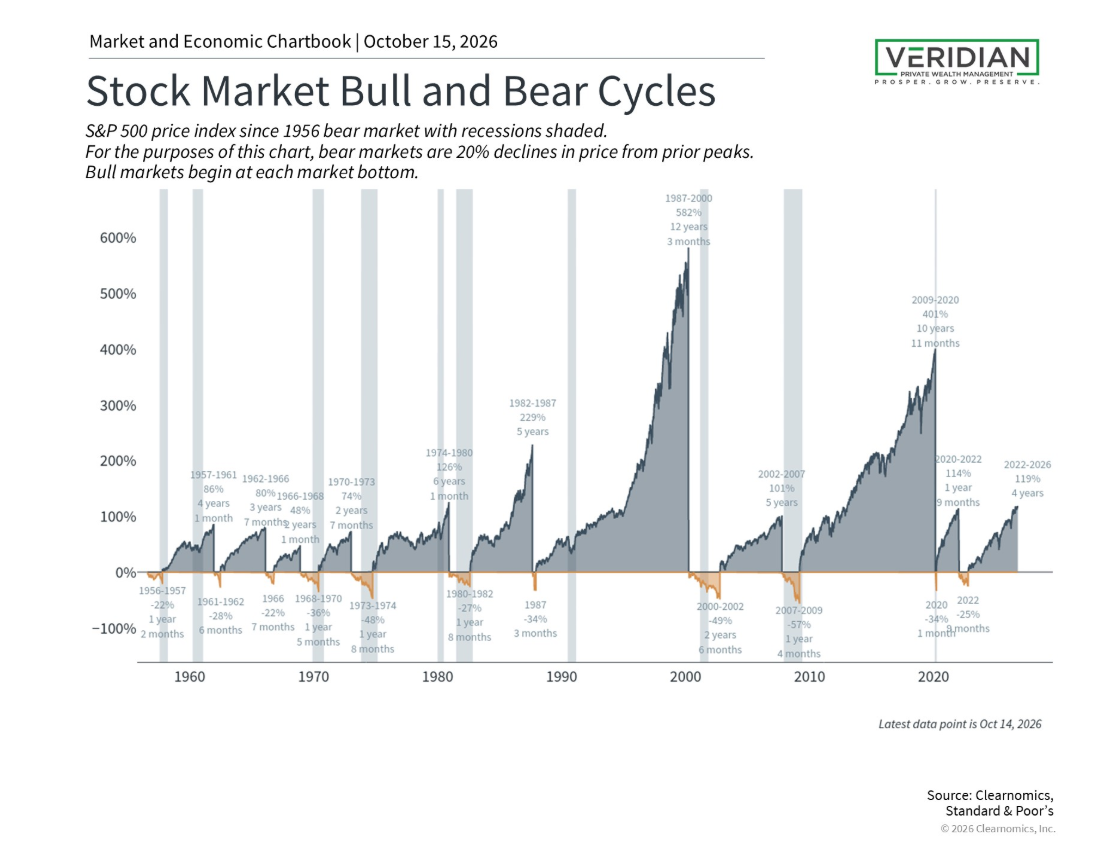
The S&P 500 reached its trough on October 12, 2022, alongside other asset classes such as bonds, amid mounting inflation concerns. Since then, the index has gained approximately 119% on a price return basis, and 131% with reinvested dividends.2 This places the current cycle among the strongest bull markets since World War II, as illustrated in the chart above. Historically, bull markets have lasted far longer than bear markets, often running five to ten years or more, including two recent cycles that extended beyond a decade.
The current cycle has already weathered periods of notable volatility, including sharp pullbacks in 2025 related to tariffs and earlier this year due to the war in Iran. Viewed in a broader context, these episodes represent normal features of any market cycle. As always, past performance is no guarantee of future results, and markets never rise in a straight line. Staying committed to a well-constructed portfolio that can navigate a range of market environments remains the prudent approach.
New all-time highs are a normal part of the market cycle
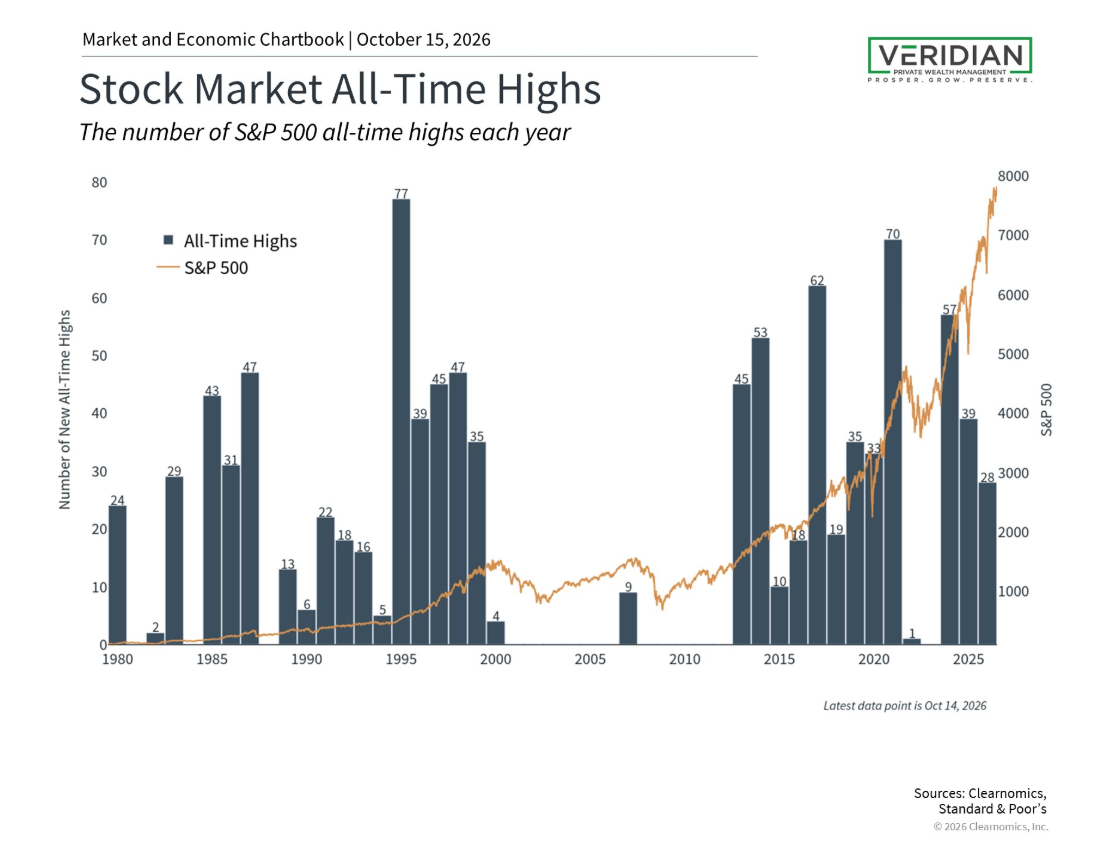
The market cycle has not simply continued; it has reached record levels. This year alone, the S&P 500 has achieved more than two dozen new all-time highs.3 This can create mixed feelings among investors, with some concerned that the market is overdue for a pullback and others worried about missing out. The chart above shows how frequently the S&P 500 has set new all-time highs across different market cycles, illustrating that steady gains and record-setting levels are entirely normal during bull markets. Recognizing this pattern and resisting the impulse to step aside whenever markets approach record territory is one of the most valuable habits a long-term investor can develop.
Valuations have improved, but risk management remains important
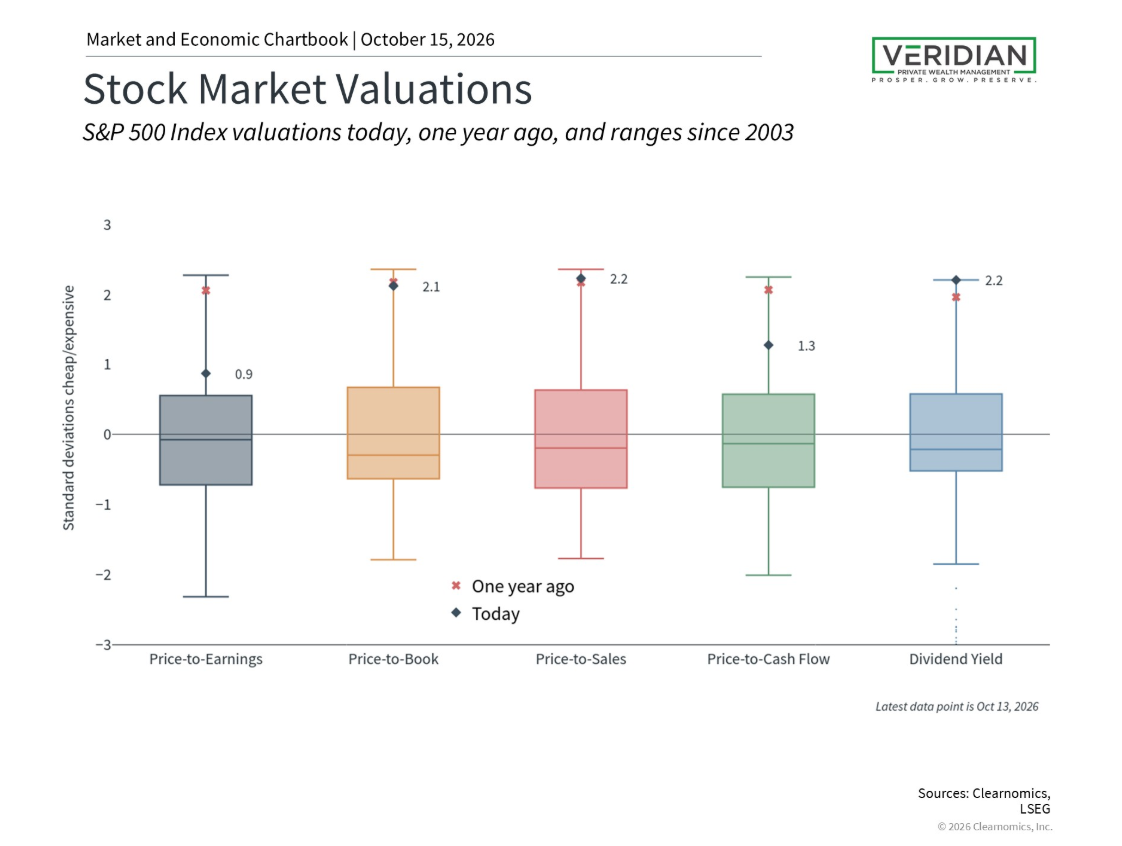
With markets at elevated valuations, it is important to consider opportunities across asset classes alongside thoughtful risk management. Strong earnings growth over the past year, including consensus estimates pointing to over 30% earnings growth for 2026, has helped bring the price-to-earnings ratio down from its peak just a year ago.4 This suggests that much of the market's gains have been driven by corporate profitability rather than investor enthusiasm alone.
At the same time, other valuation measures remain above their long-run historical averages. Dividend yields, for instance, are historically low relative to current interest rates and bond yields. Valuations are not short-term timing tools, but they do help in positioning portfolios over years and decades. Higher valuations can suggest a smaller margin for error, reinforcing the value of holding a diversified mix of asset classes. Bond yields, for instance, are near multi-decade highs, making them more attractively valued.5
The bottom line? As the bull market begins its fifth year, it's a good time to reflect on the positive developments over this market and economic cycle. Uncertainty is a natural part of investing, so staying balanced and focused on long-term financial goals remains important.

Angela Major Hart, J.D., CFP®
Angela Major Hart, J.D., CFP® has extensive work experience in the financial and legal sectors and has an unparalleled passion for delivering top-tier client service, portfolio management, and wealth planning.

224-760-4416
Contact