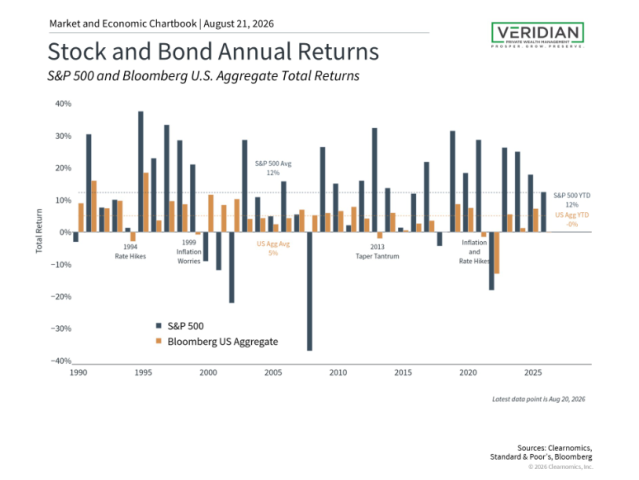
The S&P 500, Nasdaq, and the Dow Jones Industrial Average have all generated double-digit total returns this year.1 Several key themes are driving these gains. Artificial intelligence continues to lift technology stocks, while the energy sector has been supported by higher oil prices. Importantly, corporate earnings have grown at a historic pace, providing a fundamental foundation for the rally. Current forecasts suggest the S&P 500 could reach an earnings-per-share figure of $347 this year, representing an annual growth rate of over 30%, well above the historical average of around 8%.2
Interest rates also play a meaningful role. The key distinction is that rates can rise for different reasons. When rates rise due to inflation concerns, they can weigh on both stocks and bonds, as seen in 2022. However, when rates rise because economic growth expectations are improving, this pushes up "real rates," or the interest rate after accounting for inflation.3 Stronger real rates can support market valuations through improved earnings while also offering bond investors more attractive yields. The chart above illustrates the historical relationship between stock and bond returns, highlighting the long periods in which both asset classes perform well during economic expansions.
Waiting for pullbacks is often counterproductive
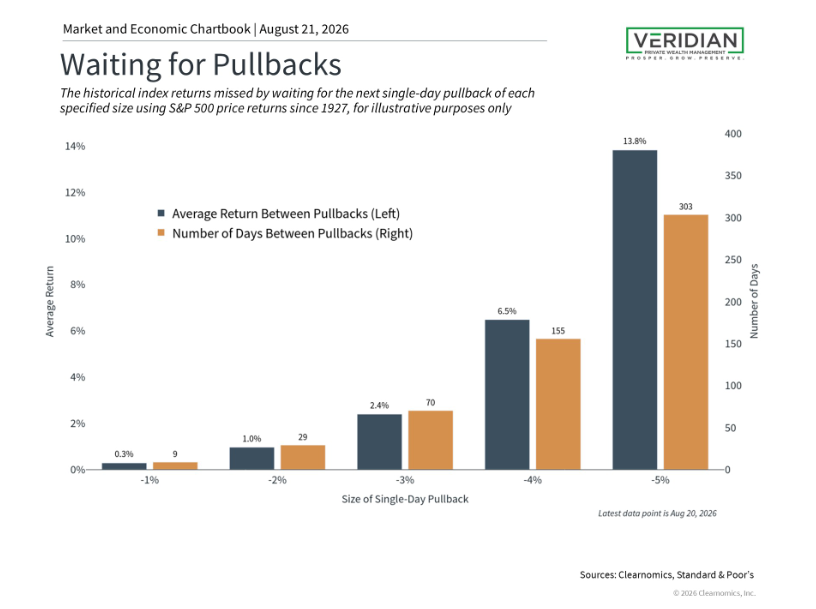
With markets near all-time highs, many investors wonder whether to make portfolio adjustments or wait for a better entry point. History shows that trying to time the market is often counterproductive. As the chart above illustrates, an investor waiting for a 5% pullback before investing would have waited 291 days on average, during which time the market would have already gained nearly 14%. New all-time highs are a normal feature of bull markets, and the next dip is often higher than the last.
For those who need to deploy capital at current valuations, strategies such as dollar-cost averaging can be helpful. Diversifying across sectors, styles, factors, and geographies can also reduce concentration risk while allowing investors to benefit from potential growth across different areas of the market.
Bond yields drive long-term fixed income returns
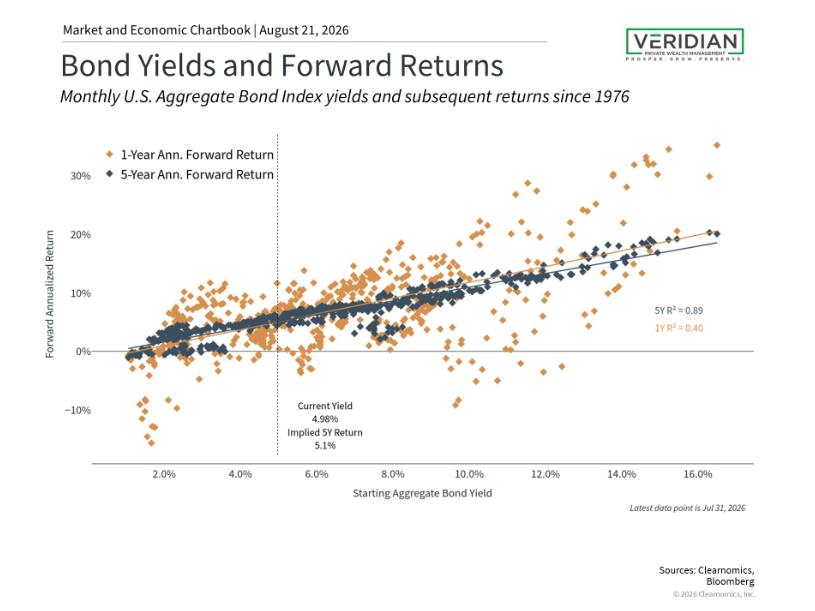
While stocks have performed well this year, bonds have been relatively flat due to rising interest rates. Bond prices move in the opposite direction of yields, so higher rates reduce the value of existing bonds. Even so, investors can benefit by reinvesting at higher yields or adjusting their portfolios accordingly. As the chart above shows, the starting yield of a bond is an important driver of long-run returns. Investment grade corporate bonds and Treasury securities are now offering income levels that were difficult to find in the years following the global financial crisis, when rates were held near zero.4
For investors who rely on their portfolios for income, or who are looking to balance equity risk, fixed income presents greater opportunities than have existed in many years. When combined with the positive trends supporting equities, both asset classes can work together to support the financial goals of long-term investors.
The bottom line? Stocks have benefited from growth trends while bond yields are historically attractive, creating opportunities across both asset classes. For long-term investors, maintaining a balanced portfolio is the best way to benefit from this environment while staying focused on financial goals.

