Nelson Mandela famously said that "education is the most powerful weapon which you can use to change the world." For many families, funding a child's education is a central financial planning priority, yet the associated costs have risen sharply over time. Grandparents often wish to contribute to their grandchildren's education as a way of creating a legacy that extends well beyond traditional gifts.
Historically, grandparents had to navigate complex rules around gifting to avoid unintended consequences related to taxes and financial aid eligibility. Recent federal financial aid reforms, however, now exclude grandparent-owned 529 accounts from the student assets portion of the aid calculation. This important change eliminates a longstanding drawback, making these accounts worth a fresh look as part of a family's education funding strategy.
The rising cost of higher education
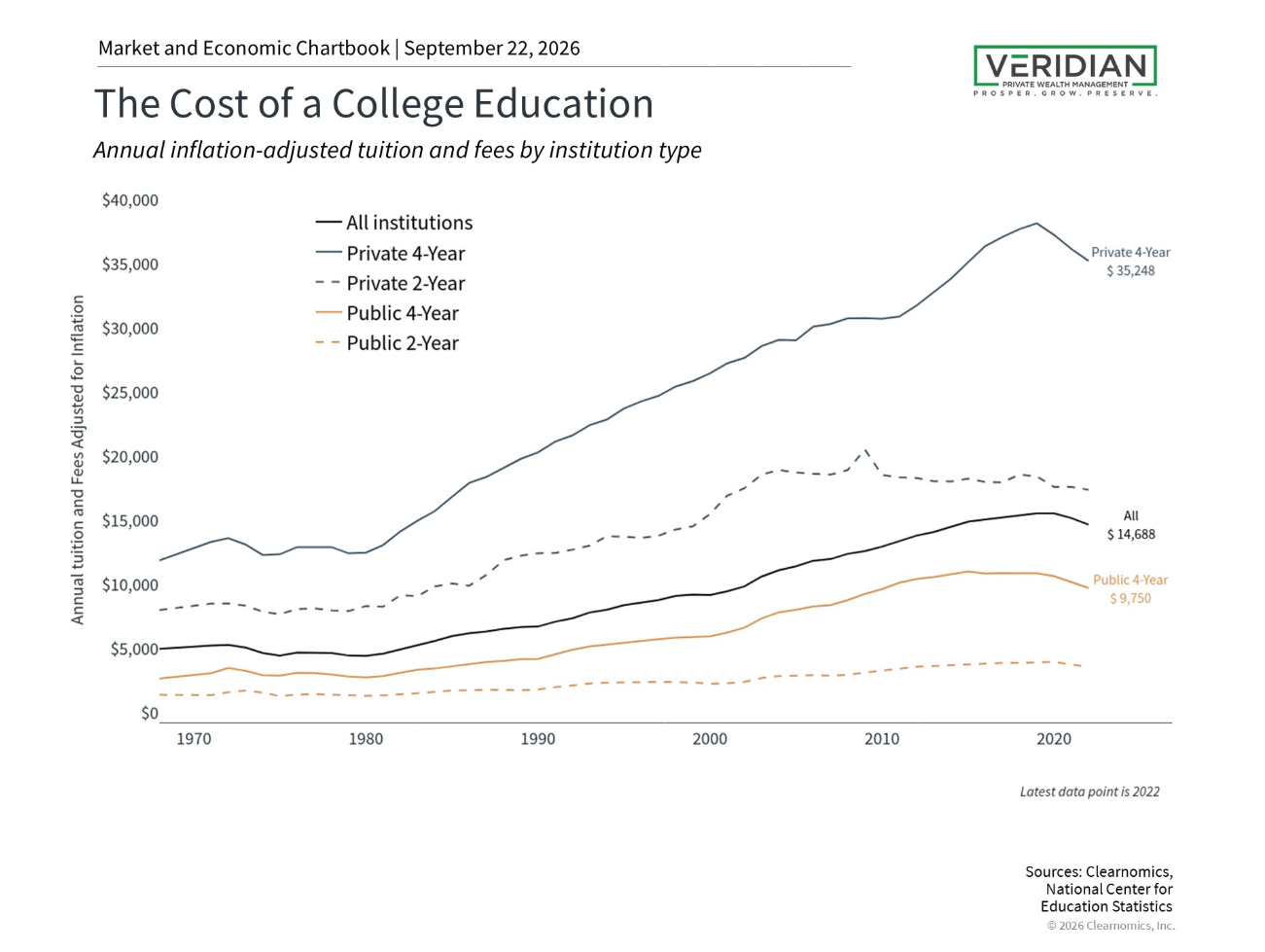
The financial burden of attending college has grown considerably, outpacing general inflation over the past four decades. As the accompanying chart illustrates, average tuition and fees, adjusted for inflation, have climbed steadily since 1963, particularly at private four-year institutions. Beyond tuition, families must account for housing, food, books, and transportation, which now average over $17,000 per year according to the College Board.1 These figures highlight the importance of early and deliberate saving.
Many families address these costs by combining multiple funding sources, including parent and student savings, scholarships, loans, and contributions from relatives. Grandparent-owned 529 accounts can play a meaningful role here. Although grandparents have long had the option to open these accounts for grandchildren, the strategy was previously less attractive because distributions were counted as student income on the FAFSA, reducing potential aid eligibility. Under the old rules, student income was factored into the Student Aid Index (SAI) at a rate of 50%, which included distributions from grandparent-owned 529 accounts.2,3 That is no longer the case.
Education funding as a tool for building a lasting legacy
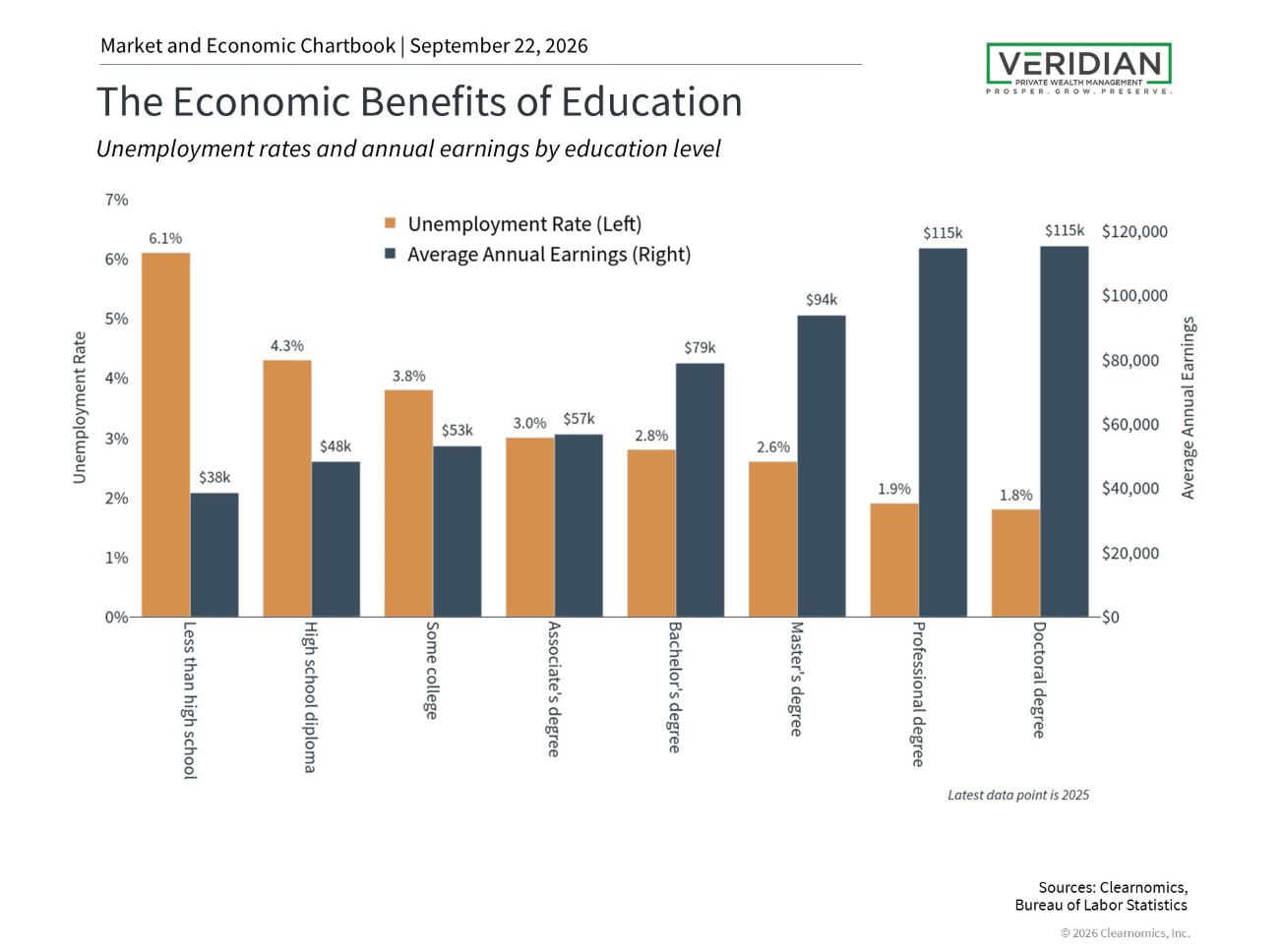
Despite rising costs, data from the Bureau of Labor Statistics confirm that the financial returns to education remain strong. Higher levels of education are associated with both greater average earnings and lower unemployment rates. For example, individuals with a high school diploma face an unemployment rate of 4.3%, while those with a bachelor's degree see that figure drop to 2.8%. For those with professional or doctoral degrees, the rate falls below 2%.4 Helping fund a grandchild's education is therefore a meaningful way to invest in their long-term success.
Grandparent-owned 529 accounts offer considerable flexibility. The account owner retains control over the assets, including when distributions are made and whether the beneficiary can be changed to another qualifying family member. If a grandchild receives a scholarship, chooses a less expensive school, or decides not to attend college, several options exist for unused funds. Under the SECURE 2.0 Act, up to $35,000 can be transferred from a 529 account into the grandchild's Roth IRA over their lifetime, tax-free and penalty-free, provided the account has been open for at least 15 years and other conditions are met.5 In addition, up to $10,000 can be used to pay off qualified student loans for the beneficiary or their siblings.6 Starting in 2026, grandparents may also withdraw up to $20,000 tax-free per grandchild for annual K-12 tuition.
For 2026, grandparents can gift up to $19,000 per grandchild annually without triggering federal gift tax reporting.7 Those wishing to make a larger contribution can front-load up to five years of gifts into a single contribution, totaling up to $95,000 (single filer or $190,000 married filing jointly), giving assets more time to compound tax-free.8 While 529 accounts do not carry an annual contribution cap, making them attractive for estate planning, in Illinois do they have a lifetime contribution limit of $550,000. Additionally, more than 30 states (including Illinois) offer an income tax deduction or credit for 529 contributions, with nine states extending this benefit to contributions made to any state's plan.9
For estate tax purposes, contributions to 529 accounts are typically considered completed gifts to the beneficiary and remove the assets from the grandparent's estate. These accounts are unusual and allow granparents to retain control, while removing substantial assets from their estate.
When used thoughtfully, grandparent-owned 529 accounts can be a powerful component of a family's broader education funding plan. They offer tax-efficient ways to reduce reliance on student loans while preserving the grandparent's ability to maintain control of the assets. Of course, any contributions should be weighed against the grandparent's own retirement needs and long-term financial goals.
The bottom line? Grandparents can leave a lasting legacy for their grandchildren in many different ways, including grandparent-owned 529 accounts. With careful planning, they can strategically invest in their grandchildren's future by helping with education costs using tax-efficient strategies.

Angela Major Hart, J.D., CFP®
Angela Major Hart, J.D., CFP® has extensive work experience in the financial and legal sectors and has an unparalleled passion for delivering top-tier client service, portfolio management, and wealth planning.

224-760-4416
Contact